

What every sect gets wrong
Why following the Salaf isn't optional

Almost every group argues using Qur’an and Sunnah.
They can’t all be right.
How do you know your understanding is correct?
The reading time may be shorter than it appears, as the text includes Arabic source material.بسم الله والصلاة والسلام على رسول الله
Who are the ones Allah praised?
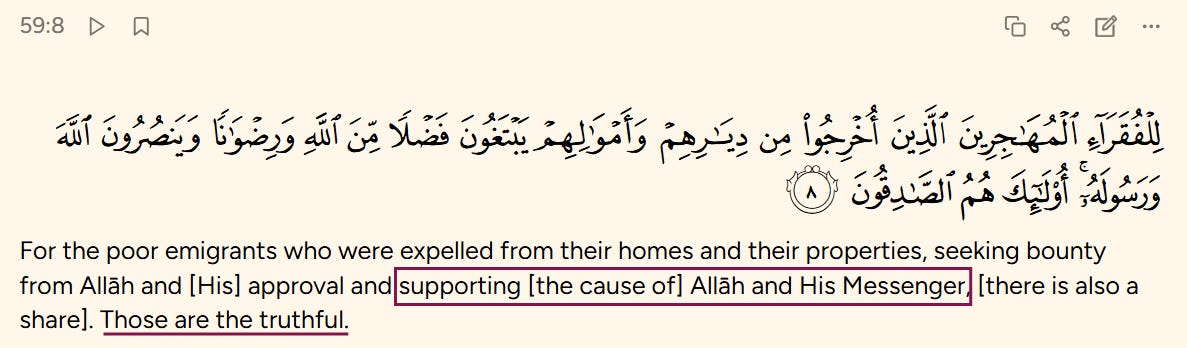
Who does this verse talk about? → The Muhajirun from the Sahabah.
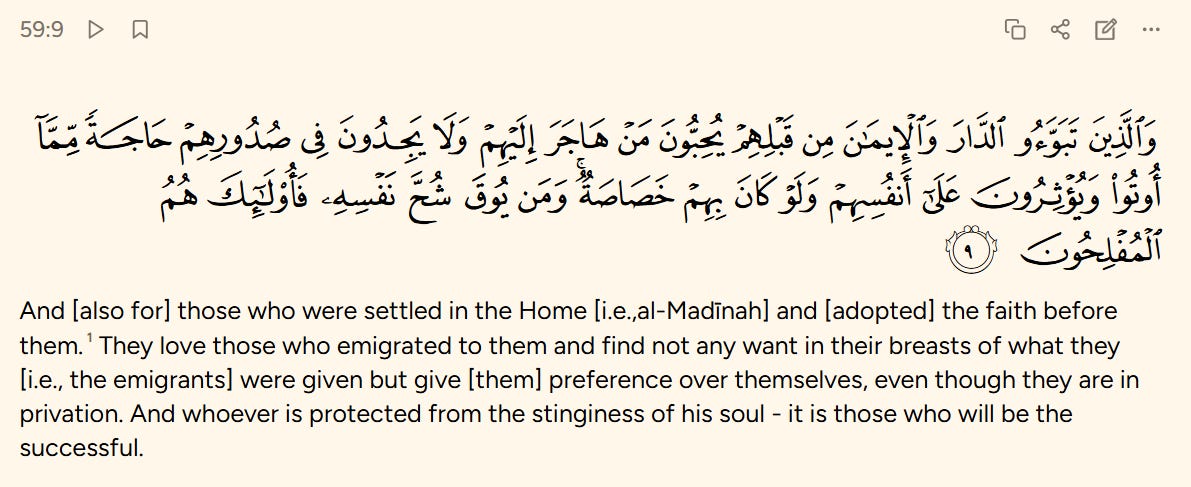
Who does this verse talk about? → The Ansar from the Sahabah.
So these are the Companions of the Prophet ﷺ - praised by Allah.
The Salaf said about these verses: There are three groups, and the two groups [above] have already passed. The best we can be after them is the third group 👇
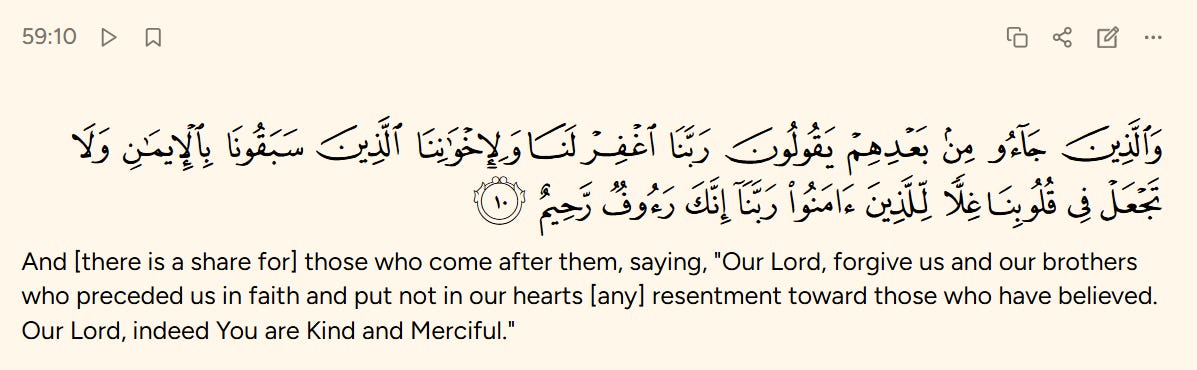
Ibn ‘Umar (رضي الله عنهما), the famous Sahabi, said: Whoever speaks badly about the first two groups (i.e., the Sahabah) or has resentment in his heart towards some of them cannot be part of this third group.1 There are similar quotes by other scholars from the Salaf.
And Allah, subhanahu wa ta‘ala, said:
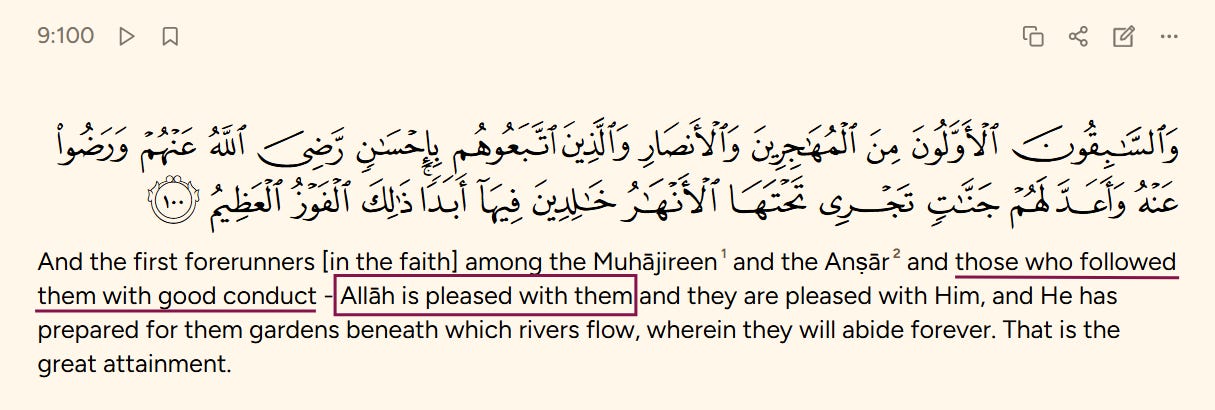
→ Allah is pleased with:
the Companions of His messenger, and
those who follow them “bi-ihsan” (with excellence).
And He, ‘azza wa jall, said:
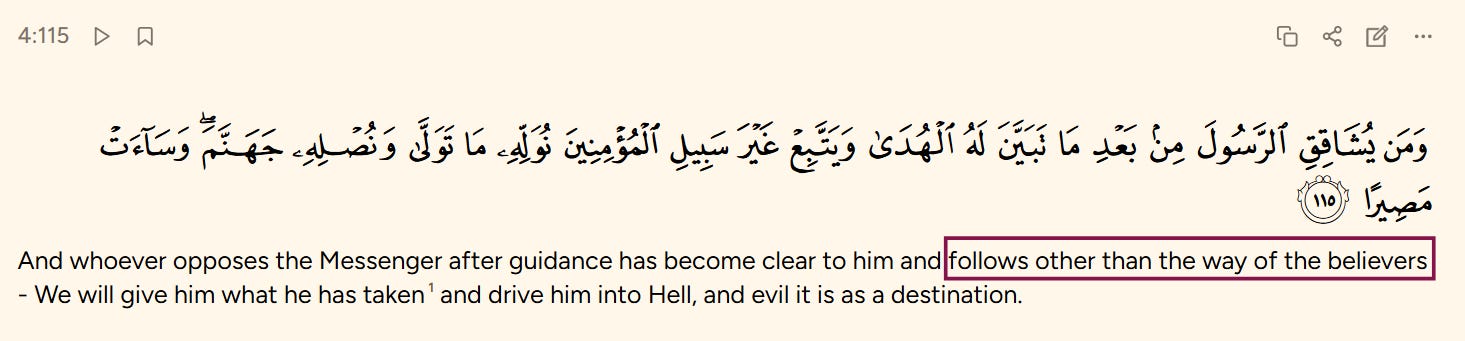
→ Allah criticizes here those who follow a way other than the way of the believers.
Who were the believers when this verse was revealed? The Sahabah!
Who are the ones the Messenger of Allah praised?
al-Imam al-Barbahari, rahimahullah, said:
واعلم أن رسول الله صلى الله عليه وسلم قال: ستفترق أمتي على ثلاث وسبعين فرقة كلها في النار إلا واحدة، وهي الجماعة، قيل: يا رسول الله من هم؟ قال: ما أنا عليه اليوم وأصحابي
And know that the Messenger of Allah ﷺ said:
“My Ummah will split into seventy-three sects; all of them will be in the Fire except one, and that is the Jama‘ah.”
It was asked: “O Messenger of Allah, who are they?”
He replied: “What I and my Companions (the Sahabah) are upon today.”
[Sharh as-Sunnah (90)]
This Hadith is authentic and was reported in various wordings.
What does this teach us?
There is only one true path.
The Sahabah were upon it.
So you cannot claim to be upon the truth while ignoring their understanding and following your own opinions or those of others instead.
As al-Barbahari, rahimahullah, said:
فمن لم يأخذ عنهم فقد ضل وابتدع
“Whoever does not take from them (i.e., his religion) has gone astray and innovated.”
[Sharh as-Sunnah (3)]
The Sahabi, Abu Hurayrah (رضي الله عنه) said:
:سئل رسول الله صلى الله عليه وسلم أي الناس خير؟ فقال: "أنا، والذين معي، ثم الذين على الأثر، ثم الذين على الأثر"، ثم كأنه رفض من بقي
The Messenger of Allah ﷺ was asked: “Which people are the best?”
He said: “I and those with me, then those who follow in their footsteps, then those who follow in their footsteps.”
Then it was as if he dismissed those who remained.
[Musnad Ahmad (8483)]
→ The Sahabah, the Tabi‘in, and the Atba’ at-Tabi‘in = the Salaf.
The Prophet ﷺ declared them the best of people.
Allah has made it clear through revelation: the Salaf were upon the truth and were the best of people.
And to be upon the truth ourselves and please Allah, we must follow them.
How do we follow their way? By returning to their athaar - i.e., narrations!
I want to address two groups here:
[1] Those who claim to only follow the Qur’an and Sunnah and thereby reject the authority of the Salaf - thinking they can understand the religion better than those who were literally praised through revelation.
[2] Those who claim to follow the Salaf, but never return to what the Salaf actually said - blindly following scholars from centuries later instead. If you quote a Sahabi or Tabi‘i to them, they likely won’t accept it unless they hear their own Shaykh say it first.
And if he contradicts what the Salaf said, you can bet they’ll follow him over them.
[1]
This religion is based on narrations, not opinions
The Tabi‘i, ‘Uthman bin Hadir (رضي الله عنه) said:
قلت لابن عباس: أوصني، قال: «عليك بالاستقامة، واتبع الأمر الأول، ولا تبتدع»
“I said to Ibn ‘Abbas (the Sahabi): ‘Give me advice.’
He said: ‘Hold fast to uprightness, follow the first matter (i.e., the way of the Sahabah), and do not innovate.’”
[al-Ibanah al-Kubra by Ibn Battah (158)]
The Sahabi, ‘Abdullah bin Mas‘ud (رضي الله عنه) said:
«اتبعوا آثارنا , ولا تبتدعوا؛ فقد كفيتم»
“Follow our athaar (lit. our traces) and do not innovate, for you need nothing more.”
[Kitab al-Bida‘ by Ibn Waddah (11)]
The Sahabi, Hudhayfah bin al-Yaman (رضي الله عنه) said:
«اتبعوا سبلنا , ولئن اتبعتمونا لقد سبقتم سبقا بعيدا , ولئن خالفتمونا لقد ضللتم ضلالا بعيدا»
“Follow our way. If you follow us, you will be far ahead.
But if you contradict us, you will be far astray.”
[Kitab al-Bida‘ by Ibn Waddah (15)]
Several reports show that Ibn Mas‘ud criticized people who contradicted the way of the Companions. He would tell them2: “Either you are more knowledgeable and better guided than the Sahabah, or you are astray.”
This was a rhetorical question, as the answer was already obvious.
And today? You have people who actually believe they ARE more knowledgeable. Wa-l-‘iyadhu billah.
The Tabi‘i, ash-Sha‘bi (رضي الله عنه) said:
«إنما هلك من كان قبلكم حين تشعبت بهم السبل وحادوا عن الطريق، فتركوا الآثار وقالوا في الدين برأيهم فضلوا وأضلوا»
“The people before you were ruined when the paths became many for them, and they deviated from the way. They abandoned the athaar (narrations) and spoke about religion according to their own opinion - so they went astray and led others astray.”
[Jami‘ Bayani-l-‘Ilm (2026)]
al-Imam Ahmad, rahimahullah, said:
إن الله جل ثناؤه، وتقدست أسماؤه بعث محمدا نبيه -صلى الله عليه وسلم- {هو الذي أرسل رسوله بالهدى ودين الحق ليظهره على الدين كله ولو كره المشركون} [الصف: ٩] وأنزل عليه كتابه الهدى والنور لمن اتبعه، وجعل رسوله صلى الله عليه وسلم الدال على معنى ما أراد من ظاهره وباطنه، وخاصه وعامه، وناسخه ومنسوخه، وما قصد له الكتاب
Indeed Allah - exalted is His praise and sanctified are His names - sent Muhammad as His Prophet ﷺ: {It is He who sent His Messenger with guidance and the religion of truth to manifest it over all religion, even if the polytheists dislike it.} [al-Saff: 9].
And He revealed to him His Book as guidance and light for whoever follows it. And He made His Messenger ﷺ the one who points to the meaning of what He intended - its apparent and hidden meanings, its specific and general [rulings], its abrogating and abrogated [verses], and what was intended by the Book.
فكان رسول الله -صلى الله عليه وسلم- هو المعبر عن كتاب الله، الدال على معانيه، شاهده في ذلك أصحابه، من ارتضاه الله لنبيه واصطفاه له، ونقلوا ذلك عنه، فكانوا هم أعلم الناس برسول الله -صلى الله عليه وسلم-، وبما أخبر عن معنى ما أراد الله من ذلك بمشاهدتهم ما قصد له الكتاب، فكانوا هم المعبرين عن ذلك بعد رسول الله -صلى الله عليه وسلم-، وقال جابر بن عبد الله: ورسول الله -صلى الله عليه وسلم- بين أظهرنا عليه ينزل القرآن وهو يعرف تأويله، وما عمل به من شيء عملنا
So the Messenger of Allah ﷺ was the one who explained the Book of Allah, pointing to its meanings. His Companions witnessed this - those with whom Allah was pleased for His Prophet and whom He chose for him - and they transmitted that from him.
Thus, they were the most knowledgeable people about the Messenger of Allah ﷺ and what he conveyed about the meaning of what Allah intended - by having witnessed what was intended by the Book.
→ So they became the ones who explained this after the Messenger of Allah ﷺ.
Jabir bin ‘Abdillah said: ‘The Messenger of Allah ﷺ was among us, the Qur’an was being revealed to him, and he knew its interpretation. Whatever he did, we did.’
فقال قوم: بل نستعمل الظاهر. وتركوا الاستدلال برسول الله -صلى الله عليه وسلم-، ولم يقبلوا أخبار أصحابه، وقال ابن عباس للخوارج: أتيتكم من عند أصحاب رسول الله -صلى الله عليه وسلم- المهاجرين والأنصار، ومن عند ابن عم رسول الله -صلى الله عليه وسلم- وصهره، وعليهم نزل القرآن، وهم أعلم بتأويله منكم، وليس فيكم منهم أحد.
But some people said: ‘Rather, we will apply the apparent [meaning only].’ They abandoned drawing evidence from the Messenger of Allah ﷺ and did not accept the reports of his Companions.
Ibn ‘Abbas said to the Khawarij: ‘I came to you from the Companions of the Messenger of Allah ﷺ - the Muhajirun and Ansar - and from the cousin and son-in-law of the Messenger of Allah ﷺ.
❗The Qur’an descended upon them3, and they are more knowledgeable of its interpretation than you. And there is not one of them among you.’”
[al-Jami‘ li-‘Ulum al-Imam Ahmad - Usul al-Fiqh (5/89)]
This religion is taqlid - imitation
al-Imam ad-Darimi, rahimahullah, said:
وقال شريح وابن سيرين: «لن نضل ما تمسكنا بالأثر».
وقال إبراهيم: «ما الأمر إلا الأمر الأول، لو بلغنا أنهم لم يغسلوا إلا الظفر ما جاوزناه، كفى إزراء على قوم أن تتخالف أعمالهم».
فالاقتداء بالآثار تقليد! فإن كان لا يجوز في دعوى المريسي أن يقتدي الرجل بمن قبله من الفقهاء، فما موضع الاتباع الذي قاله الله تعالى: {والذين اتبعوهم بإحسان}؟
And Shurayh and Ibn Sirin said:
“We will not go astray as long as we hold fast to the athar (narrations).”
And Ibrahim said:
“The matter is only the first matter (i.e., the way of the Sahabah). If it had reached us that they washed only the fingernail, we would not have exceeded it.
It is sufficient blame for a people that their actions differ.”
Following the athaar is taqlid!
If, according to the claim of al-Marisi, it is not permissible for a man to imitate those before him from the jurists (from the Salaf) - then what about the following mentioned by Allah ta‘ala: {and those who follow them with excellence}?
[Naqd ad-Darimi ‘ala-l-Marisi (p. 263)]
→ Shurayh, Ibn Sirin, and Ibrahim (an-Nakha‘i) were big scholars from the Tabi‘in. Radiyallahu ‘anhum.
Harb al-Kirmani, rahimahullah, studied under al-Imam Ahmad and many other prominent scholars of his time. He conveyed the consensus of the Salaf regarding the correct creed. In his book, he wrote:
ومن زعم أنه لا يرى التقليد، ولا يقلد دينه أحدا فهذا قول فاسق مبتدع عدوا لله ولرسوله - صلى الله عليه وسلم -، ولدينه، ولكتابه، ولسنة نبيه عليه السلام، إنما يريد بذلك إبطال الأثر، وتعطيل العلم، وإطفاء السنة، والتفرد بالرأي، والكلام، والبدعة والخلاف. فعلى قائل هذا القول لعنة الله والملائكة والناس أجمعين
“Anyone who claims that they do not accept taqlid, and that they do not imitate anyone in their religion, is a sinful innovator (fasiq mubtadi‘), an enemy of Allah, His Messenger ﷺ, His religion, His Book, and the Sunnah of His Prophet, ‘alayhi-s-salam.
His only intention is to:
abolish the athar (narrations),
obstruct the knowledge, and
extinguish the Sunnah.
- so he is free to [promote] his own opinion, speculative theology (kalam), innovation, and opposition.
May the curse of Allah, the angels, and all people be upon anyone who makes such a claim.”
[Masa’il Harb (3/978)]
al-Imam al-Barbahari, rahimahullah, said:
فالله الله في نفسك، وعليك بالأثر، وأصحاب الأثر، والتقليد؛ فإن الدين إنما هو بالتقليد [يعني للنبي صلى الله عليه وسلم وأصحابه رضوان الله عليهم] ، ومن قبلنا لم يدعونا في لبس، فقلدهم واسترح، ولا تجاوز الأثر، وأهل الأثر
“So fear Allah! Fear Allah regarding yourself! Hold fast to the athar, the people of athar, and taqlid - for this religion is nothing but taqlid (meaning: of the Prophet ﷺ and his Companions, may Allah be pleased with them).
❗Those before us did not leave us in confusion. So imitate them and be at ease.
And do not go beyond the athar and its people.”
[Sharh as-Sunnah (144)]
al-Imam al-Ajurri, rahimahullah, said:
فالمؤمن العاقل يجتهد أن يكون من هذه الملة الناجية باتباعه لكتاب الله عز وجل وسنن رسوله صلى الله عليه وسلم، وسنن أصحابه رضي الله عنهم وسنن التابعين لهم بإحسان وقول أئمة المسلمين ممن لا يستوحش من ذكرهم مثل سفيان الثوري والأوزاعي ومالك بن أنس والشافعي وأحمد بن حنبل وأبي عبيد القاسم بن سلام ومن كان على طريقتهم من الشيوخ
فما أنكروه أنكرناه وما قبلوه وقالوا به قبلناه وقلنا به ونبذنا ما سوى ذلك
“The rational believer strives to be from this saved group by following:
the Book of Allah,
the Sunan of His Messenger ﷺ,
the Sunan of his Companions - may Allah be pleased with them,
the Sunan of the Tabi‘in, who followed them with excellence,
and the statements of the A’immah of the Muslims - whose mention is not unfamiliar - such as Sufyan ath-Thawri, al-Awza‘i, Malik bin Anas, ash-Shafi‘i, Ahmad bin Hanbal, Abu ‘Ubayd al-Qasim bin Sallam, and those scholars who followed their methodology.
What they rejected, we reject. What they accepted and said, we accept and say.
And we discard everything besides that.”
[Sharh al-Arba‘in by al-Ajurri (53)]
So, no. You can’t understand the Qur’an and Sunnah by yourself - and your opinions and personal interpretations have no place in the religion of Allah. Rather, you are obliged to follow the understanding of those who came before you (the Salaf).
[2]
From whom do you take your knowledge?
al-Imam Ahmad, rahimahullah, said:
العلم هكذا يؤخذ: انظر عافاك الله ما كان عليه محمد وأصحابه
“This is how knowledge is taken: May Allah grant you well-being - look at what Muhammad (ﷺ) and his Companions were upon.”
[al-Wara‘ by al-Marrudhi (390)]
The Sahabi, ‘Abdullah bin Mas‘ud (رضي الله عنه) said:
«لا يزال الناس بخير ما أتاهم العلم من أصحاب محمد صلى الله عليه وسلم، ومن أكابرهم، فإذا جاء العلم من قبل أصاغرهم فذاك حين هلكوا»
“People will remain in a good state as long as knowledge comes to them from the Companions of Muhammad ﷺ and from their big ones.
But when knowledge comes from their small ones, that is when they get ruined.”
[al-Mu‘jam al-Kabir by at-Tabarani (8589)]
al-Imam Abu ‘Ubayd al-Qasim bin Sallam, rahimahullah, said:
والذي أرى أنه في الأصاغر: أن يؤخذ العلم عمن كان بعد أصحاب النبي - صلى الله عليه وسلم-، ويقدم ذلك على رأي الصحابة وعلمهم، فهذا أخذ العلم عن الأصاغر
ولا أرى عبد الله أراد إلا هذا
“What I understand by ‘the small ones’ is: taking knowledge from those who came after the Companions of the Prophet ﷺ and giving it precedence over the views and knowledge of the Sahabah❗️- that is taking knowledge from the small ones.
And I do not see that ‘Abdullah intended anything other than this.”
[Gharib al-Hadith by Abi ‘Ubayd al-Qasim bin Sallam (4/261)]
Do you understand what this means? When you take your knowledge from scholars who came after the Sahabah and prioritize their views over the Companions’ - you get ruined. And sadly, this is precisely what we see happening today!!
It was narrated that al-Imam Ahmad rebuked a man, saying:
أقول لك: أصحاب رسول الله -صلى الله عليه وسلم-، وتقول: التابعين
“I tell you about the Companions of the Messenger of Allah ﷺ, and you say: ‘The Tabi‘in [said]’!?”
And Abu ‘Abdillah al-Qawariri said:
سمعت أحمد يذاكر رجلا فقال له الرجل: قال عطاء، فأخذ أحمد نعله وقال: أقول لك: قال ابن عمر، وتقول: قال عطاء، من عطاء؟ ! ومن أبوه؟ !
I heard (al-Imam) Ahmad exchanging knowledge with a man, and the man said to him, “‘Ata said...”
So Ahmad grabbed his sandal4 and said: “I tell you ‘Ibn Umar said’ and you tell me ‘Ata said’? Who is ‘Ata?! And who is his father?!”
[al-Jami‘ li-‘Ulum al-Imam Ahmad - Usul al-Fiqh (5/116)]
→ ‘Ata’ was a prominent scholar from the Tabi‘in. Al-Imam Ahmad obviously knew this. However, he strongly criticized the methodology of equating the statements of the Companions with those of scholars who came after them.
If even the Tabi‘in - the best scholars after the Sahabah - have no authority to contradict the Companions, what makes you think scholars who came centuries later do?
(And it’s improbable the Tabi‘in knowingly contradicted the Companions!)
There is also a narration from al-Imam Malik in which he stated: those who give precedence to the statement of a Tabi‘i over that of a Companion are to be called to repentance!!
→ This shows why the Salaf are the scholars worthy of your taqlid - unlike those who merely claim to follow the Sahabah, they actually did. They prioritized the Companions’ way above all else and were strict in adhering to their athaar.
If the Sahabah differed on a matter, is one allowed to introduce another view [outside their statements]?
al-Imam Ahmad, rahimahullah, said:
هذا قول خبيث، قول أهل البدع، لا ينبغي أن يخرج من أقاويل الصحابة إذا اختلفوا
“This is a vile statement, the statement of the people of innovation (bida‘). It is not befitting to go outside the statements of the Sahabah when they differed.”
[al-Jami‘ li-‘Ulum al-Imam Ahmad - Usul al-Fiqh (5/100)]
In another report, he said:
إذا اختلف أصحاب رسول اللَّه -صلى اللَّه عليه وسلم- يختار من أقاويلهم، ولا يخرج عن قولهم إلى من بعدهم
“When the Companions of the Messenger of Allah ﷺ differed, one chooses from among their statements and does not go outside their views to [the opinions of] those who came after them.”
[al-Jami‘ li-‘Ulum al-Imam Ahmad - Usul al-Fiqh (5/104)]
So, no. Your Shaykh has no authority to contradict the early scholars - no matter how big his name is. And you aren’t allowed to give his views precedence over the Salaf, especially when he contradicts them.
And before one says, “my Shaykh is more knowledgeable” - every sect says this. The Murji’ah have their scholars, the Jahmiyyah have theirs, even the Khawarij have them. No one denies these men have knowledge, but big names mean nothing when the question is: Does he follow the Salaf or contradict them?
And sadly, this happens more often than many realize, because people do not return to the statements of the Salaf - but instead interpret the Qur’an and Sunnah on their own or through later scholars.
But these scholars themselves are obligated to follow the Salaf!!
And it’s quite ironic to contradict the statements of the most knowledgeable scholars (the Salaf) while telling others, “the scholars know more than you.”
al-Barbahari, rahimahullah, said:
فانظر رحمك الله كل من سمعت كلامه من أهل زمانك [خاصة] فلا تعجلن، ولا تدخلن في شيء [منه] حتى تسأل وتنظر هل تكلم به أصحاب رسول الله صلى الله عليه وسلم [أو أحد من العلماء؟] فإن وجدت فيه أثرا عنهم فتمسك به، ولا تجاوزه لشيء، ولا [تختر] عليه شيئا فتسقط في النار
“So look, may Allah have mercy on you, at everyone whose words you hear from the people of your time [especially].
Do not be hasty, and do not enter into anything [of it] until you ask and look: did the Companions of the Messenger of Allah ﷺ speak about it, [or any of the scholars (from the Salaf*)]?
If you find an athar (narration) from them concerning it, then hold fast to it, and do not go beyond it for anything,❗and do not choose anything over it❗, lest you fall into the Fire.”
[Sharh as-Sunnah (8)]
al-Imam ad-Darimi, rahimahullah, said:
وقال بعضهم: إنا لا نقبل هذه الآثار، ولا نحتج بها، قلت: أجل، ولا كتاب الله تقبلون، أرأيتم إن لم تقبلوها، أتشكون أنها مروية عن السلف، مأثورة عنهم، مستفيضة فيهم، يتوارثونها عن أعلام الناس وفقهائهم قرنا بعد قرن؟ قالوا: نعم، قلنا: فحسبنا إقراركم بها عليكم حجة لدعوانا أنها مشهورة مروية، تداولتها العلماء والفقهاء، فهاتوا عنهم مثلها حجة لدعواكم التي كذبتها الآثار كلها، فلا تقدرون أن تأتوا فيها بخبر ولا أثر،
Some of them said: We do not accept these athaar, nor do we use them as proof.
I said: Indeed - and nor do you accept the Book of Allah. Tell me: even if you don’t accept them, do you doubt that they are narrated from the Salaf, transmitted from them, widespread among them, and passed down from the leading figures and jurists (fuqaha) of the people from generation to generation?
They said: No (we don’t doubt it).
We said: Then your acknowledgment of them is sufficient proof against you - as we said they are well-known and widely narrated, transmitted by the scholars and jurists. So bring forth from them something similar as proof for your claims - which all the athaar contradict. But you cannot bring forth any report or narration.
وقد علمتم، إن شاء الله، أنه لا يستدرك سنن رسول الله صلى الله عليه وسلم وأصحابه، وأحكامهم وقضاياهم إلا بهذه الآثار والأسانيد على ما فيها من الاختلاف، وهي السبب إلى ذلك، والنهج الذي درج عليه المسلمون، وكانت إمامهم في دينهم بعد كتاب الله عز وجل، منها يقتبسون العلم، وبها يقضون، وبها يقيمون، وعليها يعتمدون، وبها يتزينون، يورثها الأول منهم الآخر، ويبلغها الشاهد منهم الغائب احتجاجا بها، واحتسابا في أدائها إلى من لم يسمعها،
And you know, in sha’ Allah, that the Sunan of the Messenger of Allah ﷺ and his Companions, and their rulings and judgments, cannot be known except through these athaar and chains of narration - despite whatever differences there may be in them. These are the means to that [knowledge], and the path upon which the Muslims have proceeded.
They (the athaar) were their leader in their religion after the Book of Allah, ‘azza wa jall.
From them they derive knowledge,
by them they judge,
by them they uphold [the religion],
upon them they rely,
and with them they adorn themselves.
The first among them passes them to the next, and those present convey them to those absent - using them as proof and seeking reward in transmitting them to those who haven’t heard them.
يسمونها السنن والآثار والفقه والعلم، ويضربون في طلبها شرق الأرض وغربها، يحلون بها حلال الله، ويحرمون بها حرامه، ويميزون بها بين الحق والباطل، والسنن والبدع، ويستدلون بها على تفسير القرآن ومعانيه وأحكامه، ويعرفون بها ضلالة من ضل عن الهدى، فمن رغب عنها فإنما يرغب عن آثار السلف وهديهم، ويريد مخالفتهم ليتخذ دينه هواه، وليتأول كتاب الله برأيه خلاف ما عنى الله به.
They call them “the Sunan,” “the athaar,” “fiqh,” and “knowledge.” They travel east and west seeking them.
By them, they make halal what Allah made halal and make haram what He made haram.
By them, they distinguish between truth and falsehood, and between the Sunan and innovations (bida‘).
By them, they draw evidence for the tafsir of the Qur’an, its meanings, and rulings.
By them, they recognize the misguidance of those who stray from guidance.
So whoever turns away from them is turning away from the athaar of the Salaf and their guidance, wanting to oppose them - to make his religion his desires, and to interpret the Book of Allah with his opinion, contrary to what Allah intended.
فإن كنتم من المؤمنين، وعلى منهاج أسلافهم، فاقتبسوا العلم من آثارهم، واقتبسوا الهدى في سبيله، وارضوا بهذه الآثار إماما، كما رضي بها القوم لأنفسهم إماما، فلعمري ما أنتم أعلم بكتاب الله منهم ولا مثلهم، ولا يمكن الاقتداء بهم إلا باتباع هذه الآثار على ما تروى. فمن لم يقبلها فإنه يريد أن يتبع غير سبيل المؤمنين، وقال الله تعالى: {ويتبع غير سبيل المؤمنين نوله ما تولى ونصله جهنم وساءت مصيرا} [النساء: ١١٥]
If you are [truly] from the believers and upon the methodology of your predecessors (the Salaf), then derive knowledge from their athaar, derive guidance through them, and accept these athaar as your leader (Imam) - just as those people accepted them as their leader.
For by my life, you are not more knowledgeable about the Book of Allah than them, nor are you equal to them. And it is impossible to follow them except by following these athaar as they are narrated.
So whoever does not accept them wants to follow other than the way of the believers. And Allah said: {and follows other than the way of the believers - We will give him what he has taken and drive him into Hell, and evil it is as a destination.} [An-Nisa: 115]
(...)
رأينا أرشد الوجوه وأهداها أن نرد المعقولات كلها إلى أمر رسول الله صلى الله عليه وسلم، وإلى المعقول عند أصحابه المستفيض بين أظهرهم، لأن الوحي كان ينزل بين أظهرهم، فكانوا أعلم بتأويله منا ومنكم، وكانوا مؤتلفين في أصول الدين، لم يفترقوا فيه، ولم تظهر فيهم البدع والأهواء الحائدة عن الطريق
فالمعقول عندنا ما وافق هديهم، والمجهول ما خالفهم، ولا سبيل إلى معرفة هديهم وطريقتهم إلا هذه الآثار، وقد انسلختم منها، وانتفيتم منها بزعمكم، فأنى تهتدون؟
(…) We see that the most correct and most guided approach is to return all rational matters to the command of the Messenger of Allah ﷺ and to what was understood by his Companions - which was widespread among them.
For the revelation was descending among them, so they were more knowledgeable of its interpretation than us and you. And they were united in the fundamentals of the religion - they did not differ in it, and innovations (bida‘) and deviant desires did not appear among them.
So what is rational to us is what agrees with their guidance, and what is rejected is what contradicts them. And there is no way to know their guidance and methodology except through these athaar.
Yet you have stripped yourselves from them and disassociated yourselves from them by your own claim - so how can you possibly be guided?
[ar-Radd ‘ala-l-Jahmiyyah by ad-Darimi (209-212)]
al-Imam al-Awza‘i, rahimahullah, said:
عليك بآثار من سلف، وإن رفضك الناس، وإياك وآراء الرجال، وإن زخرفوا لك بالقول
“Hold fast to the narrations of the early predecessors (i.e., the Salaf), even if people reject you; and shun the opinions of men, even if they beautify them for you with words.”
[ash-Shari‘ah by al-Ajurri (127)]
Return to the narrations of the Salaf. Study THEIR books. Learn from THEIR understanding. May Allah grant you and me success in what pleases Him.وصلى الله وسلم وبارك على نبينا محمد وعلى آله وصحبه
والحمد لله رب العالمين
If you spot any mistakes in the translations, please let me know!
Mawsu‘ah at-Tafsir al-Ma’thur (76296-76297)
Paraphrased - the exact narrations can be found, for example, in Kitab al-Bida‘ by Ibn Waddah.
i.e., because they lived during the time of revelation and witnessed it.
i.e., to leave the place
Allahuma Barik sister!
You nailed every aspect MashaAllah!
A must reminder for us all to return to constantly- examining our level of adherence and sincerity to Allah’s path.
May Allah increase you in goodness dunya and akhirah and safeguard you, your family and teachers ❤️❤️
جزاك الله خيرا اختي.
This is a great read. May Allah increase you in guidance and make you amongst the people of Jannah.